

Uncategorized
April 22, 2010 •
Putting It All on Paper
An exclusive look into how an iconic apparel brand created ‘couture’ and ‘ready-to-wear’ stationery collections
It’s a fashion trivia tidbit that the Lilly Pulitzer brand was born of happenstance. The company’s namesake — then married to Peter Pulitzer, grandson of publishing legend Joseph Pulitzer — ran a juice stand off Worth Avenue in Palm Beach, Fla., in the late 1950s, as an offshoot of some citrus groves the two owned. She asked her dressmaker to make her some dresses that camouflaged the juice stains.
The result — a sleeveless shift made of bright, colorfully printed cotton — would become a staple of the line incorporated not too long after the frocks began outselling her juice. And once the American public saw Jackie Kennedy (a school friend of Lilly’s) wearing one, everyone else wanted one, too. The brand became a sensation, and when the dust settled, its fashion identity was firmly fixed as what the affluent wear to play, created during the Camelot years no less.
But now, 50 years later, when the company wanted to venture into stationery, nothing would be left to chance, explained James Bradbeer Jr., president, Lilly Pulitzer. “We thought about making the product ourselves, but realized our infrastructure wasn’t set up to effectively get stationery into the hands of our customers. We just didn’t have a proper sales force to service thousands of stationers and what have you. The reason to sign a license is to hire industry experts to execute a job where we might otherwise have a large learning curve.”
The brand extension itself was a perfect fit, he continued. “Everyone knows that Lilly loves a good party and, even more so, loves to throw the very best ones! Lilly has a great appreciation for the art form of entertaining through the details, from invitations to follow-up thank-you notes and everything in between. By extension, our brand has always been associated with entertaining, and correspondence is a natural extension of the Lilly Pulitzer lifestyle.”
A Partner in Paper
Once a brand decides to go the licensing route, finding the right licensee is probably the most important factor in determining the extension’s future. The devotees of any brand know it like a family member, and recognize whether an extension will succeed in an almost instinctive way. If something is off, chances are the extension won’t endure.
When it came to Lilly Pulitzer, there were special considerations relating to both the line’s clientele and the brand’s identity, Bradbeer pointed out. “Lilly Pulitzer is known for colorful prints full of whimsical details that bring a smile to people’s faces. We knew we wanted Lilly Pulitzer stationery to resonate with a top-tier consumer who knew good product. We knew the line would have to incorporate our prints, but would just as importantly have to embody Lilly’s spirit and the brand’s sense of humor.”
Enter Lifeguard Press, a company partially born of happenstance. It was launched when now-President Todd Ferrier drove up the California coast with wife Kim to meet with the artist Susan Wallace Barnes. Inspired, they produced a calendar.
“Licensed products have always been the primary focus at Lifeguard Press,” mused Ferrier. “I have fallen in love with everything I’ve ever sold. Next to my family, the most passionate relationships in my life have involved the brands I have been privileged to represent. ”
His passion shines through: Eight years later, the company’s Susan Wallace Barnes 2008 catalog featured her work not only on meticulously produced calendars, but on an extensive range spanning note cubes to paperweights, imprintables to beverage napkins — in other words, a complete statement for retail venues, carefully tailored to the needs and whims of the artist’s fans.
When it comes to licensing, understanding the power of a brand is key, Ferrier emphasized. “A brand is the most powerful force in business. Without it, you’re just dealing in commodities, and anyone can come along and carve out a share of your business. But with a good brand you have a weapon to defend your business and a foundation to build the future.”
Lifeguard’s next license (which, being fashion-oriented, helped prepare Lifeguard for its latest introduction) was Vera Bradley. That 25-year-old company, known mostly for its quilted cotton handbags, has been often imitated, but sets itself apart with dynamic signature patterns, high-quality materials and exquisite craftsmanship. As a result, it has legions of fans.
The Vera Bradley paper line, now starting its fourth year, is as extensive as that of Susan Wallace Barnes. It mirrors the main brand by releasing product that complements newer handbag patterns. “In the licensing business, it’s all about who you represent,” Ferrier commented. “So the more your products reflect the licensed brand, the better they’re received.”
Project Pulitzer
A big part of Lifeguard’s winning licensing formula was created with these two brands as training ground. “Definitely, you learn as you go,” Ferrier added. “Great photography and ensuring our product line makes an emotional connection with the brands we work with is our key to success.”
Meanwhile, this is not Lilly Pulitzer’s first venture into licensing; the company has sleepwear, eyewear and fragrance licensees. “We work hard to incorporate the spirit of Lilly Pulitzer in all licensed products and enjoy great working relationships with our licensees,” Bradbeer emphasized. “We stay very close to the execution of our licensed product extensions with regards to design, marketing, distribution strategy and so on. With Lifeguard Press, we found a company who could bring our vision to life and give it proper representation in the marketplace.”
Explained Ferrier, “We got on board with Lilly Pulitzer to add to their brand. A brand is magic. We take the time to understand its magic. We have to do it justice; every product has to exude the recognizable style of Lilly Pulitzer. We went into this undertaking to tell the story of whom we represent.”
The enormous, ambitious line, to be unveiled at the America’s Mart in Atlanta in January, tells quite a tale. While other licensees may offer a handful of products, this extension encompasses roughly seven categories, with 128 SKUs in its “ready-to-wear” category and over 200 items in its “couture” line:
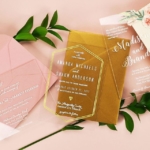
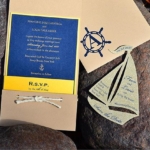
• Custom invitations and stationery, with engraving, letterpress, foil stamping and offset options;
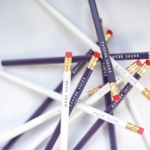
• Academic/office offerings like pencil sets, clipboards, file folders and notebooks;
• Stationery such as correspondence cards, notecards and fill-ins;
• Gifts including sticky note and pad sets, dry erase and magnetic boards, frames, matches, coasters, mugs and playing cards;
• Children’s items such as night lights, diaries and activity books;
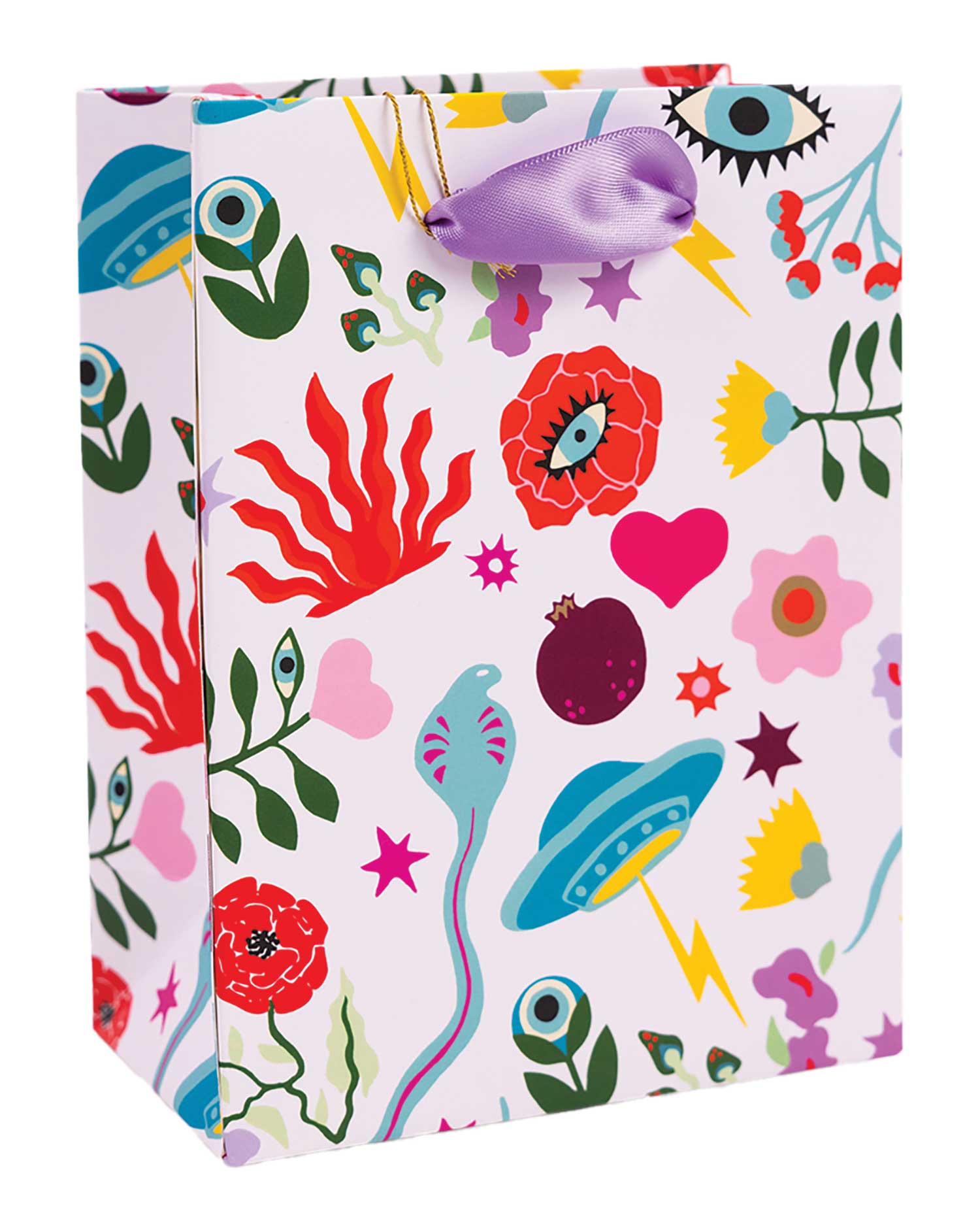
• Giftwrap and accessories; and
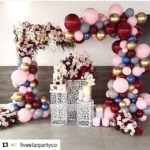
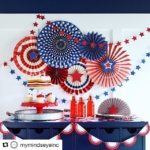
• Partyware, with napkins, plates, tumblers, drink umbrellas, party crowns and decorative pompon.
Despite its vast range, each item brings what Bradbeer called “our unique sensibility, full of the winks and nods our prints are known for” to life. “These details, like the cabana-inspired packaging on the printed mugs, create the same compelling, emotional draw to the stationery (as) our apparel and accessories lines. Lifeguard Press did a fantastic job interpreting our brand in the medium they know so well, from five-color letterpress on the high-end to printed cocktail napkins on the casual side. There’s a reason for all of it to live within our brand.”
Luxe touches and surprises, like hand-lined envelopes and the ability to purchase many pieces in a favorite pattern, speak to its discerning audience. Wedding invitations can even match bridesmaids’ dresses.
Ferrier said the larger-than-life range resulted from many brainstorming sessions, and that creating customized stationery, a new endeavor, necessitated a fresh approach. “With non-custom products, the original pattern is more true to its original form. Product development with custom stationery is more extensive, such as dissecting specific elements out of pattern swatches and creating new designs from that.”
Partyware and kids’ products were also perfect fits, continued Ferrier. “The brand is all about entertaining, so creating casual, fun tableware was fitting. Same with the children’s line, there’s an audience that wants to share the brand with their kids.”
The response so far has been “exceptional,” Bradbeer reported. “People cannot wait to get their hands on the product.”
Echoed Ferrier, “We’ve had a fantastic response with numerous focus groups, and our PR efforts with consumer magazines are praising this line as a must-see for 2009!”
Bradbeer reported that the line will be available at all 21 Lilly Pulitzer retail stores, www.lillypulitzer.com and most Lilly Pulitzer Via Shops (around 70 stores). “These channels will all carry gift product and boxed stationery, and some will also carry personalized,” he stated. “We’re targeting upper-end paperies across the country. We hope accounts who will do well with the brand will carry the full breadth of the line as often as possible.”
And what’s to come in coming seasons? Ferrier described that much like its couture counterpart, the entire line will be updated at least twice yearly, with spring/summer and fall/winter releases. “We have been blessed with partners that trust our reputation and give us much leeway to introduce the products we see fit.”