


Features
July 16, 2025 •
The Ultimate Upcycle: Legacy Publishing Group
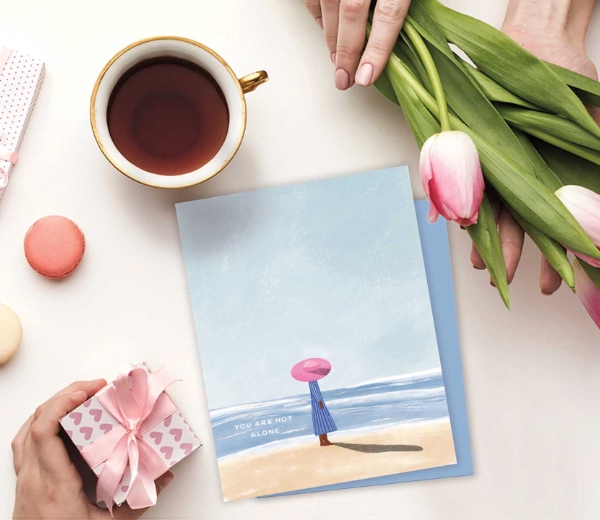
Legacy Publishing Group actually descended from another family business: Dunn & Company, a book printing and manufacturing business, opened by Dave Dunn in 1976. His three daughters, Cathy, Mary Pat and Pam, grew up assisting its “book hospital” business, converting hardcovers to paperbacks.
 The waste from those covers eventually generated over 500,000 pieces of board a month — along with an enormous trash bill. And that’s how Legacy Publishing Group was born, recalled co-owner Carlos LLanso, who entered this family’s orbit when he married Cathy.
“In 1993, we started making coasters, books, ornaments and boxes using that trash,” LLanso recalled. “We needed artwork, which we initially sourced by purchasing ephemera, at the Ephemera shows in the UK, antique markets in New England and Brattle Books in Boston.”
Legacy launched in June 1993 with 48 SKUs at a small market in Valley Forge, Pennsylvania, he described. “Our one-color catalog, with pencil drawings by Cathy, was a four-pager. Our elevator pitch was, ‘Made in America, made from trash, everything retails for under $5, no minimum order and it doesn’t sell in 90 days, we’ll give you your money back!’ We wrote about $100,000 during that five-day show in a 10-by-10-foot booth. We were trying to get rid of the trash — and discovered we had started a business.”

LLanso, also the new executive director of the Greeting Card Association (GCA), delved into Legacy Publishing Group’s storied past and future.
ST: Clearly much has changed in stationery during the past 32 years. What jumps out at you as the biggest, and how has Legacy responded?
CL: The way we manufacture is completely different. We used to color separate artwork with film, burning plates and printing offset. Now, all cards are run on digital presses. We used to make everything in our factory (as all our cards and coasters still are), now we manufacture some product overseas.
Our original “Old World” ephemera was Victorian, country and nostalgic. We commissioned original art, [but] eventually yielded to licensing art. (This) allowed us to launch our greeting card line in 2006 with various looks and themes.
Six years ago, Seedlings joined the family. The brand was built on the idea that, while it would have the backing of Legacy, it’s designed, directed and marketed by the next generation. That (included) two nieces and then (my daughter) Libby, who has done an incredible job differentiating the brand. It’s her baby, and even though we all have ideas and suggestions, the voice and the art direction is all Libby.

In 2024, Legacy launched On The Bright Side (OBS). It also benefits from our relationships with licensed artists. While having a similar aesthetic to Seedlings, it relies on a different group of artists, its non-greeting card products are more aligned with Legacy and it incorporates scripture.
What really jumps out is what hasn’t changed. Our first employee, Judy, started 10 months after that first trade show. Thirty-one years later, she’s still with us. Many others have been (here) over 20 years. (Meanwhile) sales reps and vendors are just as important now.
ST: While you’re the public face of Legacy, it actually has six owners. Who are they, and how did you all come together?
CL: Three sisters and three husbands: Mary Pat (Dunn) Heelan and Pete Heelan; Pam (Dunn) Cross and Timothy Cross; and Cathy (Dunn) LLanso and Carlos LLanso.

Pete and I were in the Army ROTC program at Boston College, and then served together from 1986 to 1991. Mary Pat was our classmate and drove us frequently to training drills. I met Cathy when Pete and I were stationed in Fort Stewart, Georgia. She was then living with her sister Pam and they both taught at an elementary school off base. Pam met Tim, who had just finished his Army days while in Georgia, around this time as well.
ST: While there are many threats to our medium, there’s potential as well. Can you share any? If you were starting a brand-new brand today, how would you run it?
CL: You have to be authentic. You have to differentiate yourself from other lines because there is no shortage of amazing paper brands! Our analog product, and the powerful message it delivers, cannot be replicated. And while technology is important to how you create products, connect with your retailers, market and manage your businesses, it does not allow that “card moment” experience.
It does not pack, in a beautiful envelope, the incredible amount of thoughtfulness, care and love that a greeting card delivers. The products our members create are important, maybe now more than ever.
ST: As executive director of the GCA, what would you like your impact to be?
CL: I’ve been a “volunteer leader” in the GCA for almost 20 years. I’ve been the beneficiary of a community that is as caring and supportive as it is creative. The friendships and the strengthening of relationships with suppliers, customers and competitors there have been incredibly beneficial to my business.

This new role motivates me to continue doing all the things I have already done — mentor, teach, lead, follow, support, learn and continue to elevate our category. Paper people are special. Greeting cards are important. What our members do matters. We need to continue reminding people of this and we need to make sure our community continues to grow. We do this by making sure that every maker continues to receive the support and care that legacy companies received when they [opened].
Coupled with that support is our responsibility to preserve and protect the tradition of sending cards. I’ll close by paraphrasing John Batiste’s Grammy speech — perhaps you recognize the Grammys? They’re the Louie Awards, but for the music industry: “The creative arts are subjective, and they reach people at a point in their lives when they need it most. It’s like a greeting card almost has a radar to find the person when they need it the most.”

0 CommentsComment on Facebook